Category: edci335

Post 4

How Gender Stereotypes Constrain Career Choice by Leah Sheppard explores how gender stereotypes influence the careers people choose. She explains the societal expectations often LED individuals to view certain jobs to be more suitable for men or women, which can limit career options and opportunities.  

  1. How could the video have been designed to generate more or better activity from viewers or students?

This video is a classic TED style presentation, which informs but relatively is passive. To encourage more learner activity, I would likely include: 

  • Reflection questions as key points (ie. “ What careers were you encouraged to consider growing up?”). 
  • Interactive polls asking students whether they associate certain careers with men, women, or both. 
  • Case studies or scenarios for viewers analyze examples of Ginger stereotyping in career decisions. 
  • Taking a moment to think, encouraging students to discuss examples from their own experiences before continuing. 
  • Link stuff for the resources or activities on career exploration and unconscious biases. 

These Add-Ons would transform learners from just viewers into active participants who critically examine their own assumptions and experiences. 

  1. How will you address any potential barriers for your learners in the use of this video to ensure an inclusive design?

There are accessibility barriers: 

  • Provide closed captions and transcripts for students who are deaf or are hard of hearing 
  • Ensure the video can be viewed with screen readers and provide alternative text for any visual content 
  • Offer playback speed controls so students can slow down or review complex sections. 

 There are cognitive and learning barriers: 

  • Provide a guided note-taking sheet with key concepts and vocab
  • Break the video into shorter segments with discussion questions between sections 
  • Summarize major points visually using a concept map or infographic 

There are cultural and social barriers:

  • Create a classroom environment where students feel comfortable discussing gender without fear or judgment 
  • Acknowledge that gender stereotypes affect people differently across cultures and identities 
  • Encourage respectful discussion and multiple perspectives 

There are also technology barriers: 

  • Providing downloadable versions or transcripts for students with limited internet access 
  • Ensure the video is accessible on multiple devices 

These strategies support universal design for learning principles by providing multiple means of encouragement, representation, and expression. 

  1. What kind of interaction would the video require from your students? Does it force them to respond in some way (inherent)?

The video mainly requires cognitive interactions, meaning the students must think about and process the information being presented. 

Inherent interaction:

This video does not inherently force students to respond because there is no posed question. Students can watch it passively without taking any action. The interaction is largely just listening, reflecting, making connections to prior experiences, considering how stereotypes influence career choices. 

Designed interaction: 

An instructor could increase interaction by requiring students to answer reflection questions, participate in discussions, complete polls or surveys before and after viewing, and analyze examples of gender stereotyping. Therefore, the videos interactions primarily reflective rather than mandatory or action-based. 

  1. What activity could you suggest that they do after they have watched the video? What type of knowledge or skill would that activity help develop? What medium or technology would students use to do the activity

Activity: career stereotype analysis and reflection 

Instructions 

  1. Students select three careers 
  2. Then they look into the gender representation of each field, common stereotypes associated with the profession, examples of individuals who challenge those stereotypes. 
  3. Students create a short presentation or infographic explaining their findings. 
  4. The students would conclude with a reflection on how stereotypes may influence career decisions. 

Knowledge and skill developed: 

Knowledge:

  • Understanding of Ginger stereotypes
  • Awareness of social influences on career choice 
  • Knowledge of diversity within professions 

Skills: 

  • Critical thinking
  • Research and information literacy 
  • Media literacy 
  • Reflection and self-awareness 
  • Presentation and communication skills 

Medium or technology 

Students could use: 

  • Canva or infographics 
  • Google slides or Microsoft PowerPoint for presentations 
  • Shared discussion board in a learning management system for peer discussion 
  • Collaborative documents for group work 

This activity works because the TEDx talk encourages students to question assumptions about gender and careers. This activity extends the learning by requiring students to gather evidence, analyse stereotypes, and reflect on social expectations that shape opportunities and choices. It moves learners from understanding the concept of applying it in real world contexts.
Post 3

Responding to prompt number 2

if an unexpected event such as a pandemic had kids learning from home, our lesson would be adapted by moving activities to an online format while keeping the opportunity for discussion, collaboration, and critical thinking. In this circumstance, we would like to ensure that all students can continue to learn successfully regardless of their location. 

To support… 

To support online learning, using systems such as Google Classroom or Microsoft Teams to organize lesson materials, tasks, assignments, and announcements. The students would have the ability to receive a “classroom” understanding through video tutorials, written guides, and live demonstrations, like a zoom meeting, those would be for how to access course materials, participate in discussions, and other necessary means to navigate the course. The families of the students would have the opportunity to also be provided with support resources to help students navigate the technology. 

Planned activities… 

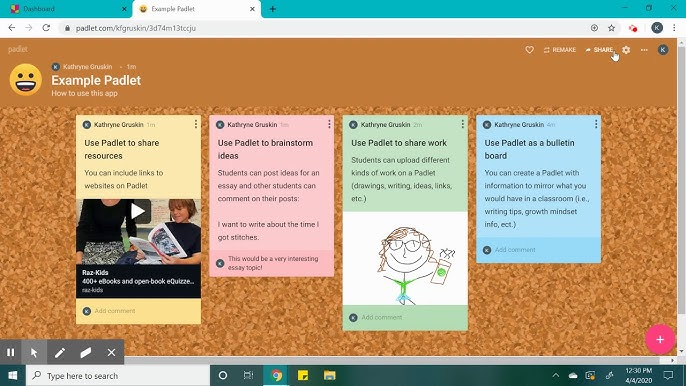
Many of the activities could be adapted to virtual platforms. For example, the career supporting activities could be completed using digital tools such as padlet or Google Slides where the students could sort careers into categories and explain their reasoning. I think pair share activity could be carried out through breakout rooms during video lessons, that would allow students to discuss ideas with peers before sharing with the larger class. 

The media analysis activity would transfer well to an online learning environment. Students could examine advertisements, videos, and other types of media through shared screens or posted resources, then participate in guided discussions or through discussion boards. 

Assessment… 

Assessment methods would also be adjusted in this scenario. Formative assessments such as the exit tickets, could be completed through a Google Forms while quizzes could be given online using tools that provide immediate feedback. Summative assessment, including media analyses and group projects, could be submitted digitally through presentations, videos, or written reports. Reflections could be completed through a journal system or even discussion posts. 

To ensure equity and accessibility, providing both synchronous and asynchronous learning opportunities would be the first choice. Recorded lessons, flexible deadlines, and downloadable materials would allow students with varying schedules, internet accessibility, or learning needs to participate successfully. Regular check-ins like emails, messages or virtual office hours would help students manage and provide additional support when needed. 

By adapting activities, assessment, and communication methods to an online environment, students would continue developing their understanding of gender stereotypes, media influence, and critical thinking skills while remaining connected to their classmates and learning communities.

Post #2

What is Experiential Learning?

Experiential learning is an educational approach that emphasizes learning through direct experience, reflection, and active engagement. Instead of focusing just on the giving of knowledge, learners participate in meaningful tasks, applying concepts to real world contexts, and reflect on personal experiences that help build an understanding. Some key characteristics are learning centered activities, problem solving, collaboration, reflection, and the connection of ideas to practice. With technology mediated environments, experiential learning can show up through digital simulations, online projects, collaborative applications, and AI supported activities which allows learners to engage with realistic challenges. 

How does Experiential Learning Involve Gender Stereotypes?

Though experiential learning is often presented as empowering and inclusive, it does not automatically challenge existing gender social constructs. Learning environments are shaped by social norms, institutional practices and technology design choices. In the education field, women have historically been overrepresented in caregiving and teaching roles while men have been more often than not been associated with leadership, technical skills, and decision-making positions. Similarly, within the economics, workforce leadership positions, financial, and analysis fields have traditionally been male dominated, reinforcing stereotypes that men are more suited for analytical and economic work. If experiential learning activities are designed around these assumptions, they may unintentionally reproduce existing inequalities. 

Technology Mediated Experiential Learning 

Technology mediated experiential learning can either reinforce or disrupt the stereotypes within these workforces. For example, simulations and group projects may privilege learners who are already confident speaking in large groups. Likewise, AI systems and digital tools may reflect biases that are deeply connected in their design or training data. As a result, opportunities for participation, recognition and skill development may not be passed out equally. Inclusive design practices, diverse representations skills, and equitable participation structures are then essential to ensuring experiential learning supports all learners. 

Discussing the Concept of Reliability and Validity 

The concept of reliability and validity are also important when evaluating experiential learning. Assessment methods must accurately measure intended learning outcomes and consistently evaluate learner performance. As discussed in the course readings on measuring learning, the possibility to not fully encompass the complex skills like collaboration, critical thinking, and adaptability, which emerge through the experiential activities that are integrated in classrooms and other educational environments. In a post AI era, this challenge becomes even more significant. The AI “guide” argues that assessment should focus on authentic demonstration of learning reflection, and evidence of thinking instead of keeping a focus on the final product which has the possibility to be heavily supported by AI. 

In all, experiential learning has the potential to challenge gender stereotypes that better prepare learners for educational and economic workplaces. Though this potential depends on intentional design choices that promote equity, valid assessment practices, and meaningful opportunities for all learners to participate and succeed.

Gurung, N. G. (2025). Construction of Gender Stereotypes and Its Implications in Development Practices. NPRC Journal of Multidisciplinary Research, 2(2), 147-159. https://doi.org/10.3126/nprcjmr.v2i2.76189

Aspenlieder, E., & Fulmer, S. (2025, August 9). Assessment in a Post-AI Era. AI Playbook for Teaching and Learning Leaders: A Community Guide; University of Guelph. https://books.lib.uoguelph.ca/aiplaybook/chapter/assessment-in-a-post-ai-era/

Post #1

Motivation Autopsy

I really enjoy making music and had the opportunity to teach myself how to play the guitar, an instrument I find very interesting, and doing this with the guidelines of a class I was taking through my program. Those guidelines were not the easiest to follow and I was left to my own devices (that being google and youtube). From a constructivist perspective, this particular course expected the learners to build an understanding independently through experience. Though, there was little support or collaboration to help construct that experience. I sort of gave up by the end of the course because I was unable to see any progress. Without knowing how to gain the skill of playing the guitar I had little to no direction as to where to start. From the cognitivist perspective, the learning lacked a clear form of organization and structure, which strongly affected my ability to process and apply that learning effectively. I felt the lack of resources was a key factor in my inability to see the progress that would have motivated the learning endeavour. The competence and relevance in my learning was not well supported. There was no real connection between the learning that was happening in class and the self-guided learning I had to do to complete the class. A behaviourist approach may have improved the experience by outlining step-by-step instructions, repetition, and feedback. Because I was mostly relying on online resources, this experience also reflected aspects of connectivism, where learning occurs through digital networks. However, without critical guidance or strong connections between those resources and the course itself, the overall process became very discouraging. If there was a purpose to that learning and help when needed, the course would have felt more supported and I could have continued learning from that point. Outlining the purpose of the learning and providing support for those learning different instruments on their own could have changed the learning outcome greatly. Learning new skills without a way to do so makes retaining information difficult and discouraging.

Ertmer, P. A. & Newby, T. (2013). Behaviorism, Cognitivism, Constructivism: Comparing Critical Features From an Instructional Design Perspective. Foundations of Learning and Instructional Design Technology. (pp.133-151). https://edtechbooks.org/lidtfoundations/behaviorism_cognitivism_constructivism

Weller, M. (2010). Connectivism. 25 Years of Ed Tech. https://read.aupress.ca/read/25-years-of-ed-tech/section/198057f5-1a3e-4436-a4b8-c6e1a3e0bd69

Test Learning Design Post

This post  will appear in a few places:

  1. in the blog feed on the front of your website
  2. in the Learning Design menu on your website. This is because we have applied the “edci335” category to this post and the menu item “Learning Design” has been created from the category “edci335.” For every post you make for this course, please assign the “edci335” category to it. You are welcome to use this blog for your personal hobbies or for other courses, in which case, you could create additional menu items and categories for them.
  3. if you give permission, your posts categorized “edci335” will be aggregated onto the Blog Feed on the EDCI 335 Course Website.

Feel free to delete this post once you understand this. If you have any questions, please reach out to your instructor.

© 2026 Sophia Thomas

Theme by Anders NorenUp ↑